Why Grocery Shopping Feels Exhausting After a Night Shift
Quick Answer: Grocery shopping feels harder after a night shift because you’re doing it on accumulated sleep debt, in bright sensory-heavy environments your body associates with wakefulness, while also making dozens of small decisions — a combination that’s genuinely more taxing than the same errand feels well-rested.
It’s not in your head — an ordinary errand really does cost more after a night shift than it would after a normal night’s sleep.

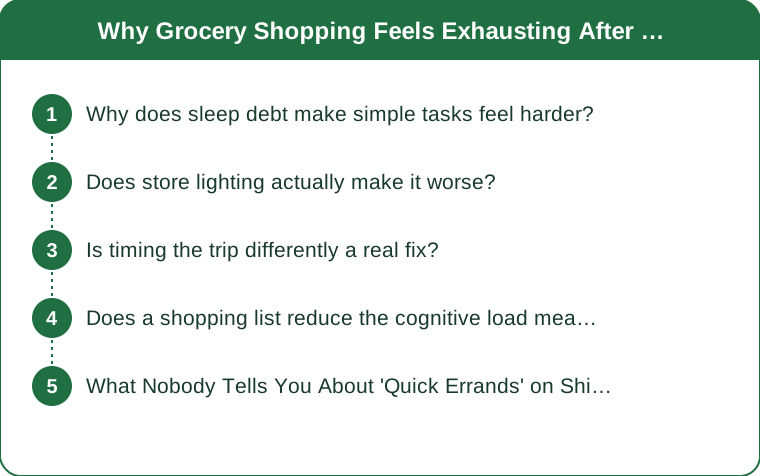
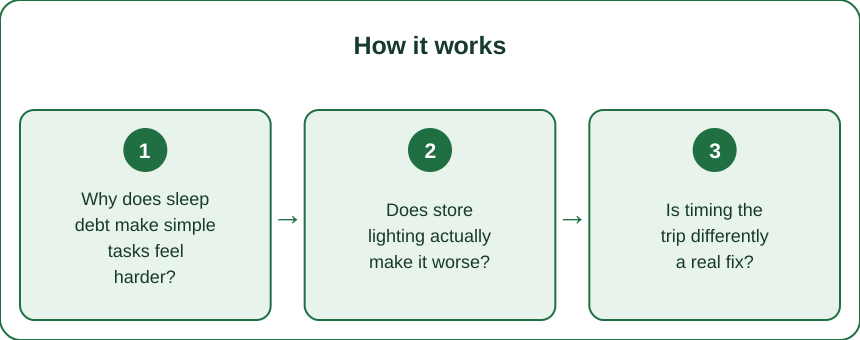
Why does sleep debt make simple tasks feel harder?
Cognitive load from decision-making — comparing prices, remembering a list, navigating aisles — draws on the same mental resources that sleep restores, and those resources are already depleted after a night shift. Tasks that are automatic when rested require more conscious effort when sleep-deprived.
Does store lighting actually make it worse?
Bright fluorescent lighting, common in grocery stores, signals daytime alertness to your circadian system at exactly the time your body is trying to wind toward sleep, creating an uncomfortable mismatch that adds to the fatigue rather than energizing you.

Is timing the trip differently a real fix?
Yes — shopping right before your shift, when you’re not yet sleep-deprived, or delegating the errand for the days you’re on shift, removes the task from the most depleted window entirely. Batch shopping on days off, even in larger trips, tends to beat frequent small ones squeezed in post-shift.
Does a shopping list reduce the cognitive load meaningfully?
Considerably — a written list turns dozens of open-ended decisions into a simple checklist, which is a much lighter cognitive task for an already-taxed brain than freeform decision-making in the store.
What Nobody Tells You About ‘Quick Errands’ on Shift Days
Errands that feel ‘quick’ when rested often take noticeably longer post-shift, since slowed decision-making extends time spent in each aisle — planning for that extra time, rather than assuming the same duration, reduces the frustration that compounds the tiredness.
TL;DR:
- Sleep debt taxes the same mental resources decision-heavy errands need
- Bright store lighting fights your circadian wind-down after a shift
- Shopping pre-shift or batching on days off avoids the worst window
- A written list meaningfully lightens the cognitive load
Planning around the fatigue, not fighting through it, is usually the more sustainable fix.
Keep Reading
This article is for general informational purposes only and is not medical advice. Always consult a qualified health professional for guidance specific to you.