How to Protect Your Eyes on Night Shift
Quick Answer: Night shift work causes eye strain through three specific mechanisms: reduced blink rate during screen work, dry air in most overnight environments, and the high contrast between a bright screen and a dark room. The fixes are the 20-20-20 rule, preservative-free artificial tears every few hours, and raising ambient light so the screen is not the brightest thing in your field of view. Blue light is a circadian issue, not primarily an eye strain one, and the two need different solutions.
Eye discomfort is one of the most common and least discussed night shift complaints. It is also one of the most fixable, because nearly all of it comes from three environmental factors you have some control over.
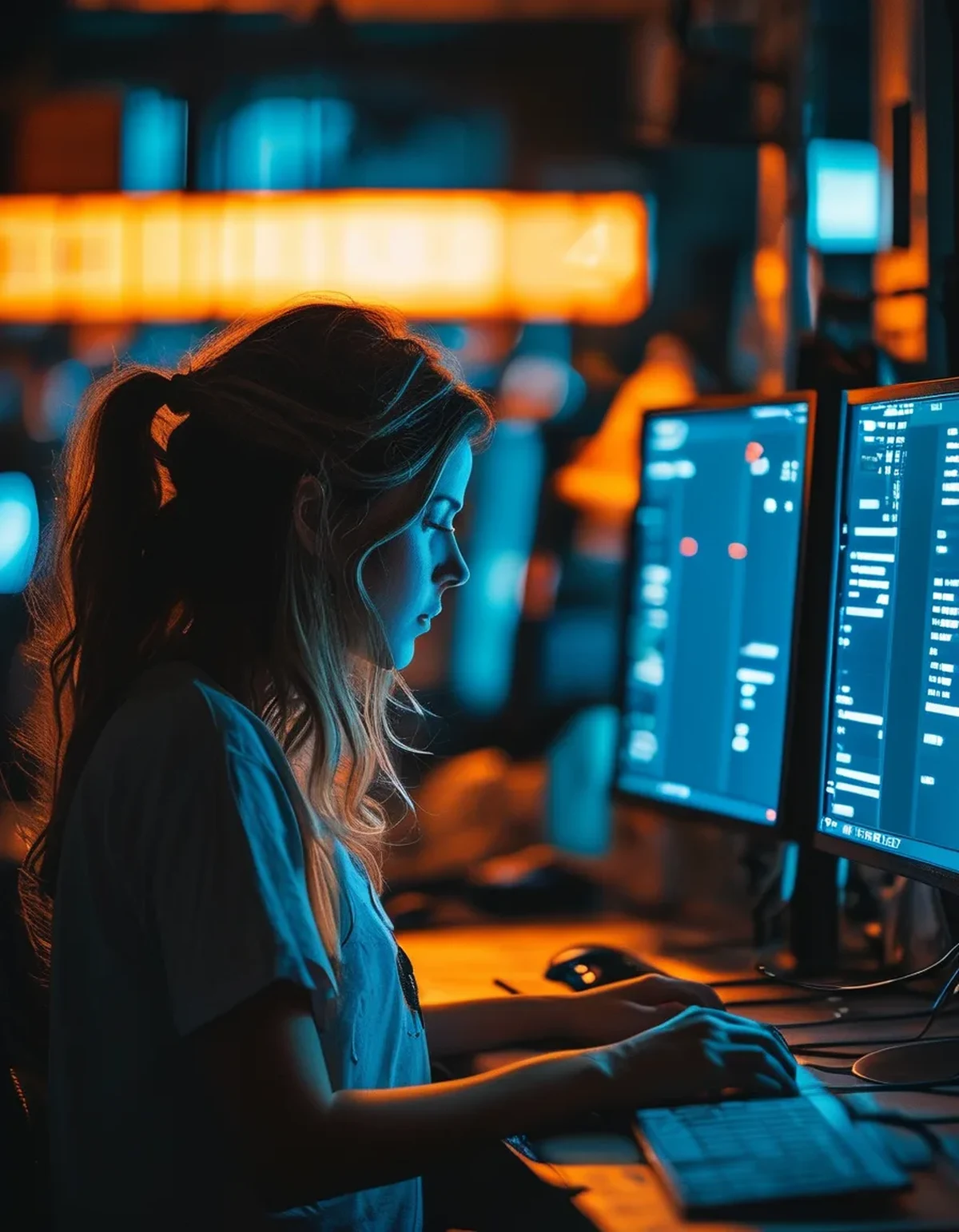
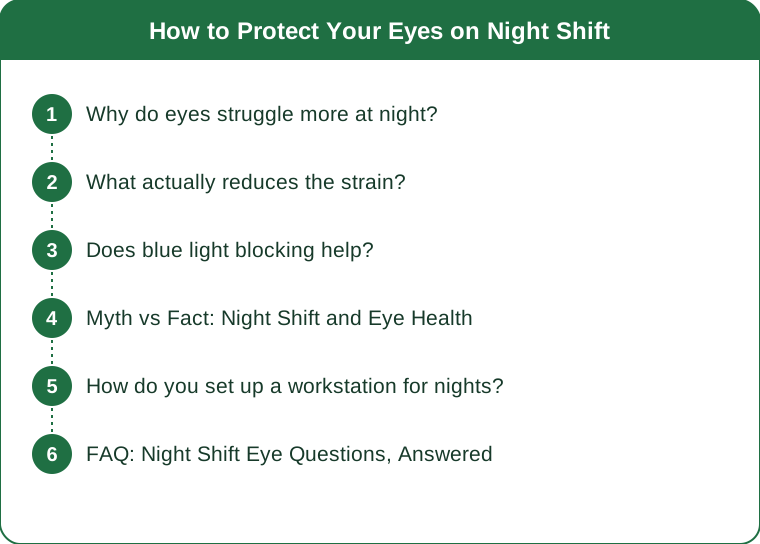
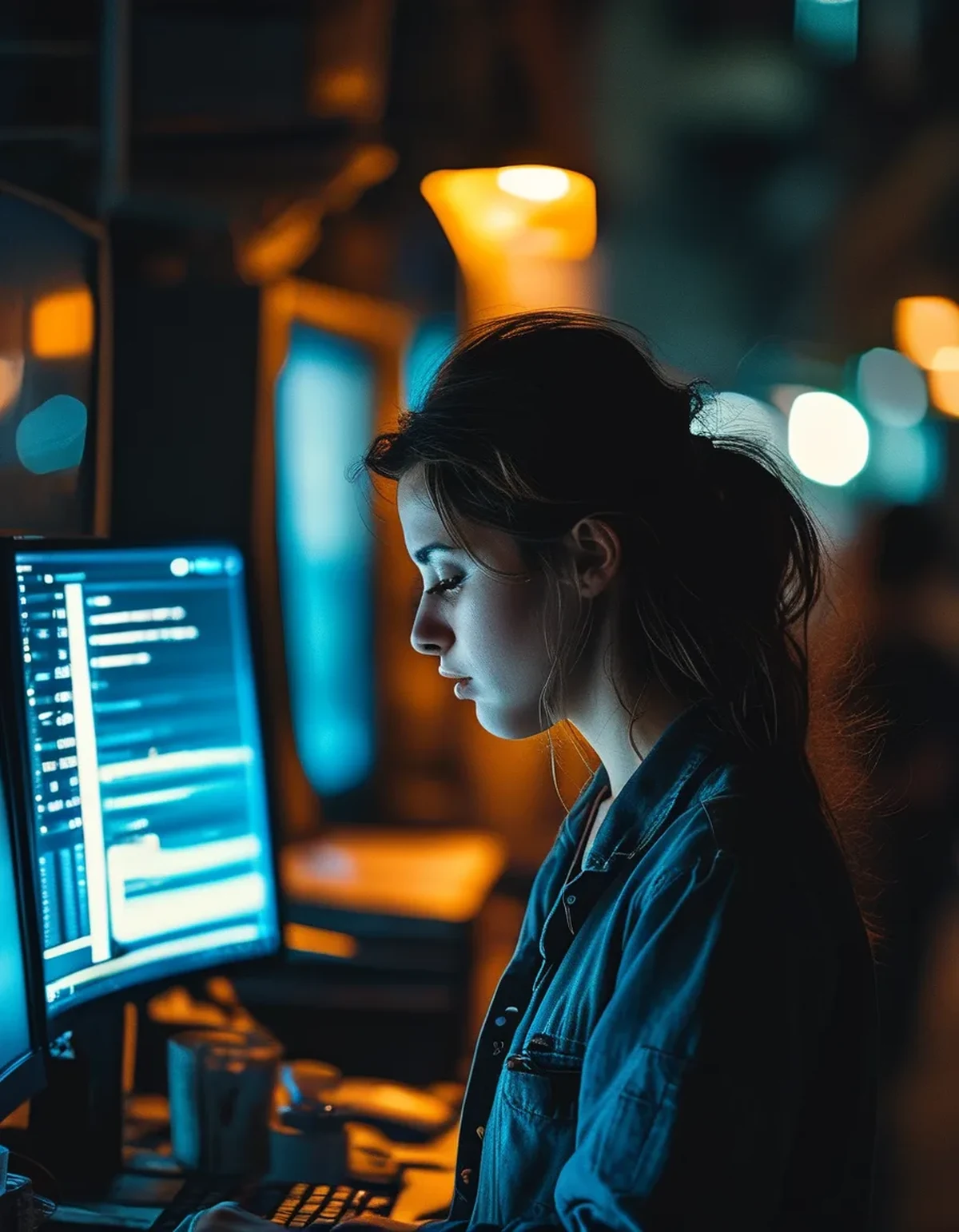
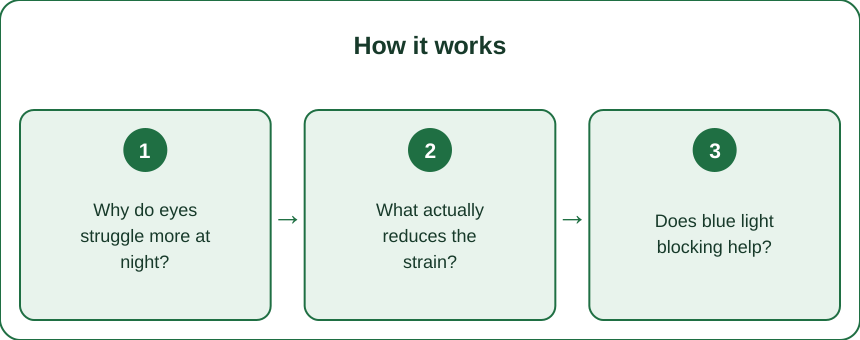
Why do eyes struggle more at night?
Four things stack up over a shift.
Blink rate drops. Normal blinking runs 15 to 20 times per minute. During focused screen work it falls to as low as 5 to 7. Each blink spreads the tear film across the eye surface, so fewer blinks means a drier, less stable surface — and drier eyes feel gritty and focus less sharply.
Overnight environments are dry. Hospital HVAC, office climate control, and industrial ventilation all run continuously and all reduce humidity. Many overnight workplaces sit at 25 to 35 percent relative humidity, well below the comfortable range.
Contrast is extreme. A bright screen in a dim room forces your pupils to constantly readjust between the screen and everything around it. That continuous accommodation is genuinely fatiguing, and it is the mechanism most people mistake for general tiredness.
The eyes are simply tired. Your circadian rhythm affects tear production and blink patterns, both of which are naturally lower in the overnight hours. You are asking your eyes to work at the time they are least equipped for it, which is why the same eight hours of screen work is harder at 3am than at 3pm.
What actually reduces the strain?
Five interventions, roughly in order of effect for the effort involved.
Raise the ambient light. This is the biggest lever and the one people get backwards. A dim room with a bright screen is far worse than a moderately lit room. Aim for the screen to be roughly as bright as the wall behind it. A small lamp behind the monitor — bias lighting — costs $15 and reduces contrast strain substantially.
20-20-20. Every 20 minutes, look at something 20 feet away for 20 seconds. This relaxes the focusing muscle and, importantly, prompts several full blinks. Set a recurring reminder for the first week until it becomes automatic.
Preservative-free artificial tears. Every three to four hours during a shift, not only when your eyes already hurt. Preservative-free matters for frequent use — preservatives in standard drops can irritate with repeated application.
Lower the screen. The top of the monitor at or slightly below eye level means your eyelids cover more of the eye surface, which reduces evaporation. A screen positioned high is a common and easily fixed contributor.
Check your prescription. Many people over 40 are working nights in glasses corrected for distance, doing close work for twelve hours. That is a strain multiplier and an eye exam resolves it.
Does blue light blocking help?
For circadian purposes yes, for eye strain the evidence is weak.
The current research on blue-light-filtering lenses shows little to no benefit for eye strain symptoms specifically. The mechanisms causing your discomfort — blink rate, dryness, contrast — are not blue light mechanisms, and filtering it does not address them.
Where blue light genuinely matters is circadian timing. Light exposure in the blue wavelengths suppresses melatonin, which is exactly what you want during a night shift and exactly what you do not want on the drive home.
So the useful protocol is close to the opposite of what most people do:
- During the shift: bright light, including blue wavelengths, particularly in the first half. This supports alertness and helps shift your rhythm.
- Last hour of the shift and the journey home: reduce light exposure. Wraparound sunglasses for the drive home are the single most effective circadian tool a night worker has.
- At home before sleep: dim, warm light only.
Blue blockers worn during the shift work against you. Save the light reduction for the end.
This is general information, not medical advice.
Myth vs Fact: Night Shift and Eye Health
Myth: Screen work damages your eyes permanently. Fact: Digital eye strain is uncomfortable and temporary. There is no evidence that normal screen use causes lasting structural damage to the eye.
Myth: Working in the dark is easier on the eyes. Fact: The opposite. A dark room with a bright screen maximises the contrast your pupils have to manage. Moderate ambient light is considerably more comfortable.
Myth: Dry eye means you need more water. Fact: Systemic hydration matters somewhat, but dry eye during shift work is mostly about blink rate and ambient humidity. Drinking more water without addressing those two changes little.
Myth: Eye strain means you need stronger glasses. Fact: Sometimes, particularly over 40. But strain from contrast and dryness will not improve with a new prescription, and getting a stronger correction for the wrong problem makes things worse.
Myth: Redness drops fix tired eyes. Fact: Vasoconstrictor drops reduce redness by narrowing blood vessels and can cause rebound redness with regular use. For shift work, use lubricating drops instead — they treat the actual problem.
How do you set up a workstation for nights?
Six adjustments, most of them one-time.
Bias lighting behind the screen. A dim lamp or LED strip. This is the highest-value change and takes five minutes.
Screen brightness matched to the room. Not maximum. If your screen looks like a light source rather than a lit page, it is too bright.
Warm colour temperature after midnight. Not for eye strain, but it makes prolonged viewing more comfortable and is easy to schedule automatically.
Matte finish or an anti-glare filter if overhead lighting reflects on your screen. Reflections force continuous micro-adjustments in focus.
A small humidifier if you have a fixed workstation. Even a desktop unit changes the immediate air around you noticeably, and dry air is a major contributor.
Text size up. Increasing font size by one or two steps reduces the focusing effort across a whole shift. There is no prize for reading small text at 4am.
As indoor heating starts in the coming weeks, workplace humidity drops further and these symptoms typically worsen. Getting the setup right now means the seasonal change costs you less.
FAQ: Night Shift Eye Questions, Answered
When should I see an eye doctor?
If symptoms persist on your days off, if you have vision changes, if one eye is affected differently from the other, or if there is pain rather than discomfort. Persistent dryness that does not respond to drops is also worth investigating — there are treatable underlying causes.
Do I need different glasses for night shift?
Possibly, if you are over 40 and doing sustained close work. A dedicated intermediate-distance prescription for screen work is a common and effective solution. Mention your shift pattern and working distance at your exam.
Will my eyes adapt if I work nights long enough?
Partially. Circadian adaptation improves some symptoms over months of consistent night work. The environmental causes — dryness, contrast, blink rate — do not adapt, which is why the workstation changes matter regardless of how long you have been doing this.
This is general information, not medical advice.
TL;DR:
- Night shift eye strain comes from low blink rate, dry air, and high screen-to-room contrast — not primarily from blue light.
- Raising ambient light behind your screen is the single most effective fix.
- Use preservative-free lubricating drops on a schedule, not only when symptoms appear.
- Get bright light during the shift and block it on the way home — that is the circadian tool that actually works.
Put a small lamp behind your monitor tonight and see how hour nine feels. It is the cheapest change on the list and usually the one people notice fastest.
This is general information, not medical advice.
Keep Reading
This article is for general informational purposes only and is not medical advice. Always consult a qualified health professional for guidance specific to you.