Night Shift and Family Life: Staying Connected When Your Hours Are Opposite
Night shift’s hardest tax isn’t biological — it’s the family dinner you’re asleep for, the weekend that lands mid-rotation, the partner living on the opposite clock — and connection on opposite schedules is a design problem with real solutions. The family guide.

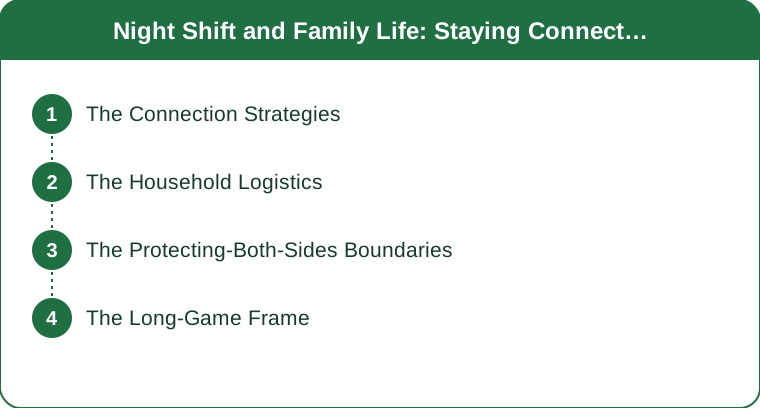
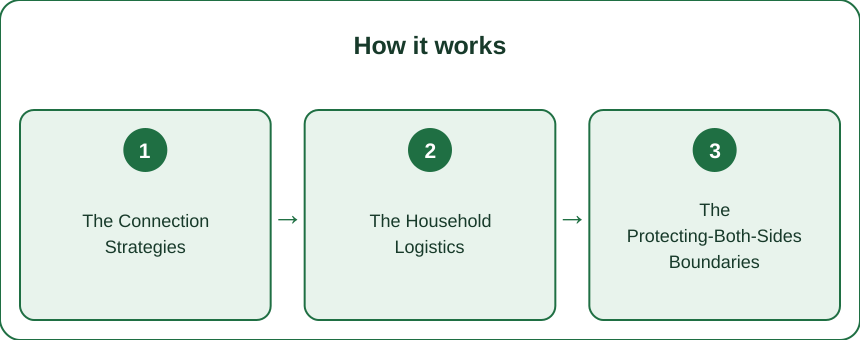
The Connection Strategies
Togetherness by design: the overlap-window audit (the honest map of when awake-hours intersect — the before-shift evening hour, the post-sleep late afternoon; the windows named so they can be protected), the anchor-meal ritual (the one shared meal daily whatever it’s called — the family dinner at 5pm that’s your breakfast; the meal as the connection keystone from the family-table doctrine; the phone-free rule doubling its value), the quality-over-quantity doctrine (the fully-present ninety minutes beating the distracted evening — the presence practice from the mindfulness chapters; the kids remembering attention, not hours), the asynchronous affection layer (the lunchbox notes, the voice messages for the kids’ bedtime, the texted photos from break — the connection that crosses the clock gap; the small-deposits system from the relationship doctrine), and the weekly summit (the calendar-and-feelings meeting on the shared day off — the logistics AND the check-in; the proactive conversation that prevents the drift).
The Household Logistics
The systems that reduce friction: the sleep-fortress treaty (the day-sleep protected by the whole household — the quiet hours, the doorbell sign, the kids’ understanding scaled to age per the sleep-protection doctrine; the sleep being the family’s shared asset, not the worker’s selfishness), the calendar centralization (the shared family calendar with shifts, rotations and events — the visibility that prevents the double-booked birthday; the rotation posted a month out), the duty-split honesty (the chores-and-parenting divided by AWAKE-hours availability, not tradition — the day-sleeper’s evening duties and the day-partner’s morning ones; the resentment-prevention arithmetic from the household doctrine), the kids-schedule integration (the school events triaged — the attend-list chosen deliberately; the recorded performances and the makeup rituals for the missed ones; the one-on-one dates on off days as the compensation system), and the backup web (the extended-family and neighbor network for the coverage gaps — the village doctrine applied to shift life).

The Protecting-Both-Sides Boundaries
The two-way care: the worker’s needs named (the sleep, the transition time, the off-day recovery — the needs stated plainly rather than resented silently; the boundary doctrine at home), the partner’s load acknowledged (the solo evenings, the single-parent stretches, the social events attended alone — the day-partner’s invisible tax honored aloud; the appreciation practice from the gratitude doctrine), the off-day negotiation (the recovery-versus-family tension handled explicitly — the first off-day’s sleep-in protected, the second’s family-first; the pattern agreed, not fought over each week), the social-life clauses (each partner’s friendships maintained — the shift worker’s isolation risk and the partner’s over-load both countered by outside connection per the community doctrine), and the check-the-resentment habit (the monthly honest audit — the small resentments surfaced early; the schedule blamed rather than each other: the shared-enemy framing that keeps the couple on the same team).
The Long-Game Frame
Sustaining it: the season honesty (the night-shift years as a chapter with an exit plan where possible — the rotation-preference requests, the seniority timeline, the career-pivot probes from the reinvention doctrine; the endurable-because-finite framing), the rituals that anchor (the guaranteed weekly family block — the Sunday-afternoon institution that survives every rotation; the traditions scaled to the schedule, not abandoned to it), the kids’-resilience note (the shift-family kids learning flexibility and dad-or-mom’s-asleep consideration — the research on shift families showing adaptation, not damage, when connection is deliberate), the professional-help threshold (the couple strain that persists deserving counseling — the shift-work-literate counselor; the strength-not-failure framing from the mental-health doctrine), and the closing reframe (the opposite-clock family as a coordination achievement — the connection built by design surviving what drift destroys; the 5pm breakfast-dinner table, full and phone-free, being the proof that the schedule bends to the family, not the reverse). Protect the overlap, share the calendar, blame the schedule not each other: the family, connected across the clock.
Map your overlap windows and protect one daily shared meal — your breakfast, their dinner, phone-free. Centralize the calendar, split duties by awake-hours, negotiate off-days explicitly, and blame the schedule, never each other.
Keep Reading
This article is for general informational purposes only and is not medical advice. Always consult a qualified health professional for guidance specific to you.