The Night Shift Workout Timing Mistake That Wrecks Your Sleep
Quick Answer: Working out right before your main sleep block — especially right after a night shift ends — delays sleep onset for many shift workers; earlier in the shift or right after waking tends to work better.
Squeezing a workout in right after clocking out feels efficient, but it’s often the exact habit that leaves you staring at the ceiling instead of falling asleep.

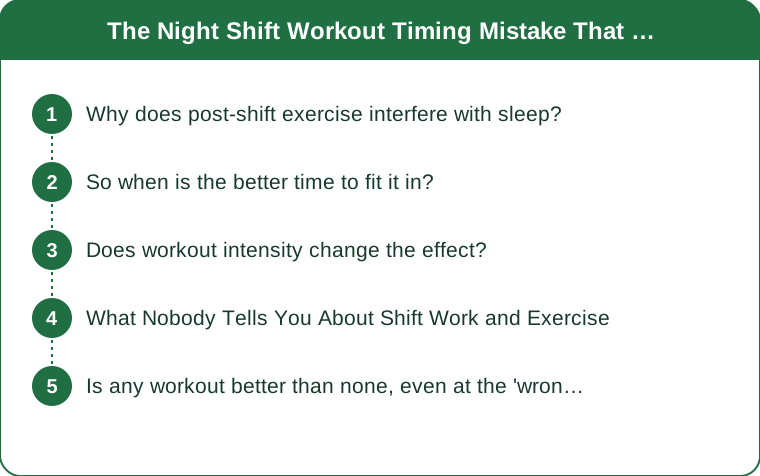
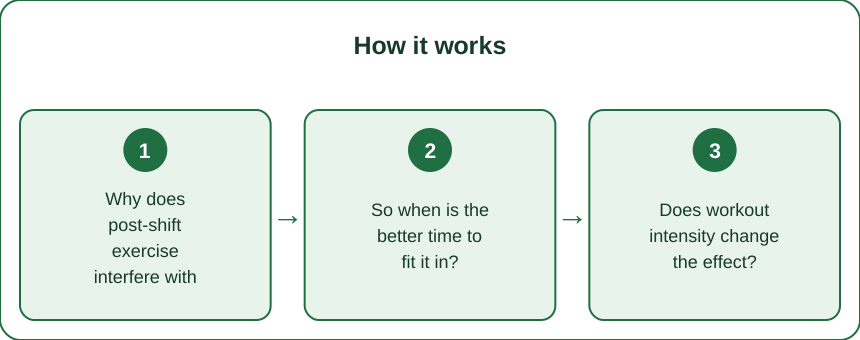
Why does post-shift exercise interfere with sleep?
Exercise raises core body temperature and stimulates alertness hormones, both of which work against the sleep onset your body is trying to achieve right after a night shift. The closer the workout is to your intended sleep time, the more it can delay actually falling asleep, sometimes by 30-60 minutes or more.
So when is the better time to fit it in?
Early in the shift, during a break, or right after you wake up (before your shift, if your schedule allows) tends to cause far less sleep disruption. The gap between workout and sleep matters more than the workout’s intensity.

Does workout intensity change the effect?
Lighter movement — stretching, an easy walk — has much less impact on sleep onset than a high-intensity session, so if timing options are limited, dialing back intensity for the pre-sleep session is a reasonable compromise.
What Nobody Tells You About Shift Work and Exercise
A lot of shift-work advice treats exercise timing like it’s optional detail, but for people already fighting circadian mismatch, workout timing can be the difference between falling asleep in 15 minutes versus over an hour. It’s rarely framed as a top-priority lever, but shift workers who move their workout earlier in the shift often report it as one of the more noticeable sleep improvements they’ve made.
Is any workout better than none, even at the ‘wrong’ time?
Generally yes — inconsistent movement is still better for long-term health than none, but if sleep quality is the main complaint, timing is worth adjusting before cutting exercise out.
TL;DR:
- Working out right before sleep can delay onset by 30-60+ minutes
- Earlier in the shift, or right after waking, tends to work better
- Lower intensity closer to sleep time is a reasonable middle ground
- Timing matters more than whether you skip a session entirely
If sleep has been rough since starting night shifts, check workout timing before assuming exercise itself is the problem — moving it earlier is often the simpler fix.
Keep Reading
This article is for general informational purposes only and is not medical advice. Always consult a qualified health professional for guidance specific to you.