Why the Same Caffeine Cutoff Rule From Day Life Doesn't Work on Night Shift
A lot of night shift workers keep the same rough caffeine rule they used on a normal daytime schedule — nothing after early afternoon — without realizing that rule was built entirely around a nighttime sleep window that no longer applies, which means it’s protecting the wrong sleep period.

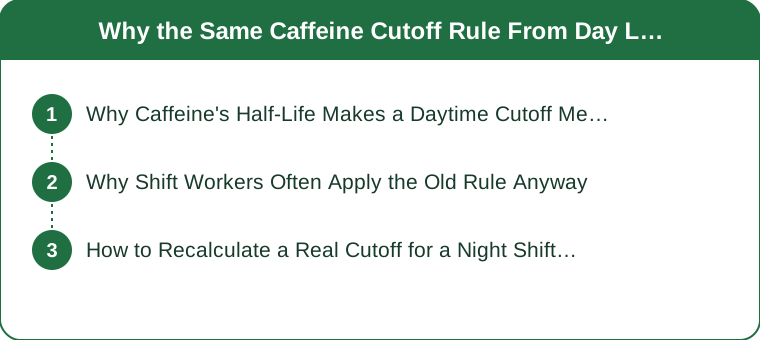
Why Caffeine’s Half-Life Makes a Daytime Cutoff Meaningless on Nights
The math: the roughly-six-hour-half-life-of-caffeine-means-a-cutoff-rule-only-makes-sense-relative-to-the-specific-hours-a-person-is-actually-trying-to-sleep (caffeine’s roughly six-hour half-life meaning any cutoff rule only makes sense relative to the specific hours a person is actually trying to sleep, not relative to a fixed clock time that assumed a normal daytime schedule, per the night-shift-sleep-guide logic — caffeines-roughly-six-hour-half-life-meaning-any-cutoff-rule-only-makes-sense-relative-to-the-specific-hours-a-person-is-actually-trying-to-sleep-not-a-fixed-clock-time), and the reframe (a cutoff time being meaningful only in relation to a sleep window, not as a standalone rule that travels across schedules)).

Why Shift Workers Often Apply the Old Rule Anyway
The habit: the old-daytime-cutoff-time-feels-like-a-fixed-piece-of-general-health-advice-rather-than-a-calculation-that-was-always-tied-to-a-specific-sleep-schedule (the old daytime cutoff time feeling like a fixed, general piece of health advice rather than a calculation that was always specifically tied to a nighttime sleep schedule, which makes it easy to carry forward unchanged onto a completely different schedule, per the night-shift-survival-guide logic — the old-daytime-cutoff-time-feeling-like-a-fixed-general-piece-of-health-advice-rather-than-a-calculation-tied-to-a-specific-sleep-schedule-making-it-easy-to-carry-forward-unchanged), and the frame (the rule surviving the schedule change even though its underlying logic didn’t)).
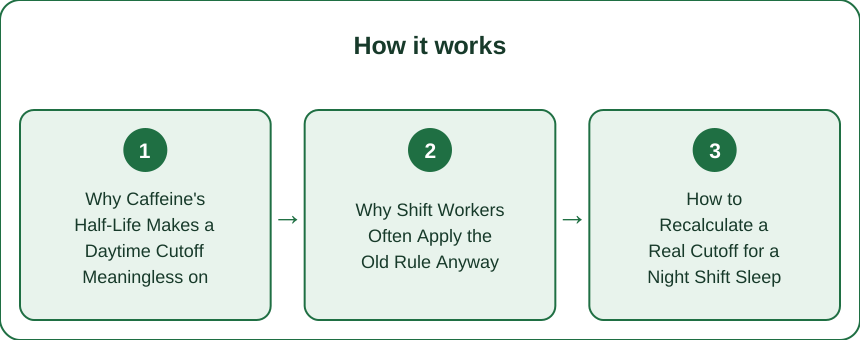
How to Recalculate a Real Cutoff for a Night Shift Sleep Window
The recalculation: the count-back-roughly-six-hours-from-the-actual-planned-start-of-daytime-sleep-and-treat-that-as-the-new-cutoff-regardless-of-clock-time (counting back roughly six hours from the actual planned start of daytime sleep after the shift ends, and treating that resulting time as the new cutoff regardless of what the clock says, since it’s the sleep window that matters, per the staying-alert-and-energized-night-shift-guide logic — the counting-back-roughly-six-hours-from-the-actual-planned-start-of-daytime-sleep-and-treating-that-resulting-time-as-the-new-cutoff-regardless-of-clock-time), and the frame (the cutoff moving with the sleep window, wherever on the clock that window actually sits).
Caffeine’s roughly six-hour half-life means any cutoff rule only makes sense relative to the specific hours a person is actually trying to sleep, not a fixed clock time carried over from a normal daytime schedule, and the old daytime cutoff often survives the switch to nights simply because it feels like general advice rather than a calculation tied to a specific sleep window. Counting back roughly six hours from the actual planned start of daytime sleep, and treating that resulting time as the real cutoff regardless of what the clock says, protects the sleep that actually needs protecting. This is general information, not medical advice.
Keep Reading
This article is for general informational purposes only and is not medical advice. Always consult a qualified health professional for guidance specific to you.